Dual Publication Scheme
Authors are encouraged to submit two companion articles: one presenting successful experimental results, and a second documenting negative or null findings.
Both articles will be assigned DOIs and will be fully citable, reflecting our commitment to valuing the entire spectrum of scientific discovery. Both articles are subject to thorough peer reviews.
We welcome empirical studies, theoretical analyses, systematic reviews, and position papers that address, but are not limited to, the following topics:
AI Applications in Higher Education
Learning Processes and Pedagogy
Educational System Design and Evaluation
Ethical, Social, and Cultural Dimensions
Faculty, Leadership, and Organizational Transformation
Infrastructure, Policy, and Strategy
Research, Publishing, and Scholarly Communication
Interdisciplinary and Global Perspectives
Future Directions and Emerging Trends
Artificial Intelligence Advances in Education welcomes a wide range of article types to support diverse and impactful scholarly communication in the field of AI in education. Accepted contributions include Original Research articles that present new empirical findings, Scoping Reviews and Systematic Reviews that synthesize literature with varying depth and methodological rigor, and Methods and Protocols articles that detail innovative approaches or technical processes.
The journal also accepts Troubleshooting articles that address practical challenges, Short Format/Single Results articles for significant preliminary findings, Data Reports to describe reusable datasets, and Perspective/Opinion pieces that offer expert viewpoints. Additionally, Conceptual Analyses are invited to explore theoretical frameworks and key models.
Submissions should contribute to theory and practice, demonstrate broad educational relevance, and emphasize user experience, learning outcomes, and generalizable insights. The journal prioritizes interdisciplinary contributions and encourages the responsible and innovative application of AI in education. All submissions must comply with the author guidelines; those that do not may be returned without review.

Anne is a seasoned senior publishing executive with over 35 years’ experience in academic/STM publishing since graduating in Biochemistry from Oxford University. Anne has worked at Elsevier (part of RELX Plc) for over 25 years in a variety of roles, most recently as CEO for Cell Press, Boston, MA and The Lancet 2018-2023, where she transformed these businesses into major open access players and grew revenues and profits while whilst doubling the Lancet journal portfolio and growing Cell Press titles by more than a third. Previously, Anne worked at Blackwell Publishers, Oxford University Press, and Pergamon, and has held company board positions at Elsevier Ltd and KeAi (Beijing and Shanghai). Anne has also previously served as a board member of the STM Association and was a member of the UK Publishers’ Association Council for more than five years. Anne was on the Industrial Board of the Oxford International Publishing Centre at Oxford Brookes, where she also taught the graduate Publishing degree program. She has served on the Program Committee for the APE until 2023.

Dr. Paul Evans has had a long career in publishing in STM and business sectors since graduating from Oxford University and first working as a computer programmer. He worked for Reed Elsevier in a variety of roles for nearly 25 years (in UK, Netherlands and China) up until becoming, in later years, Senior Vice President at the global headquarters in Amsterdam. He then became the managing director for SAGE Publishing’s Asia Pacific company at its hub in Singapore for 7 years, doubling its size and performance. Later, he was for three years director of Nature Research China with Springer Nature in Shanghai and an adviser to the Chinese government for his industry. Then, on return to the UK during Covid-19, he worked for Maverick Publishing Specialists as a consultant and Charlesworth Publishing Services as Director of Partnerships. Initially as a teacher in Japan, he had also taken a strong interest in education, then in Publishing Studies at a Scottish university as a lecturer and course leader, and now in working in education-related areas in the UK.

With more than 30 years’ experience across scholarly, professional and B2B publishing, Sally Wilson brings deep expertise in portfolio and product strategy, content delivery, and author and editor engagement. She spent over 20 years at Wolters Kluwer and nearly 7 years at Emerald Publishing in senior leadership roles.
Sally was vice president in global publishing at Emerald, where she led the publishing strategy for Emerald’s award-winning publishing programme across more than 360 hybrid and open access journals and 500 book frontlist titles. She also served as publishing director on Emerald’s Board and played an instrumental role in securing the acquisition of the Institution of Civil Engineers publishing programme.
She has a strong track record of delivering transformational growth. At Emerald, Sally spearheaded a mission-led commissioning strategy aligned to the United Nations Sustainable Development Goals (SDGs), doubling the frontlist for scholarly books and delivering more than 20% growth in journal article output.
Sally is an SDG Publishers Compact Fellow and has been an active contributor to industry-wide initiatives focused on equity, inclusion, sustainability and academic freedom. She served on the policy committee for the Joint Commitment for Action on Inclusion and Diversity in Publishing, was a member of the taskforce that created STM’s Sustainability Roadmap and played a leading role in Emerald’s stance on academic freedom through its support of the #DefendResearch campaign.
At SCS Journals, she brings this breadth of experience to support the development of high-quality, future-focused journals that deliver academic rigour, global relevance and meaningful impact.

Professor of Learner Centred Design at University College London, Rose Luckin is an internationally recognized expert in the ethical and effective use of AI in education. She serves as an honorary advisor to the editorial team and is the director of EDUCATE. Professor Luckin has advised the UK House of Commons Education Select Committee on the Fourth Industrial Revolution, and co-founded the Institute for Ethical AI in Education. She is the president-elect of the International Society for AI in Education, and is a member of several influential panels, including the UK Office for Students Horizon Scanning Panel and the AI and Robotics Panel of the Topol Review on the future of the NHS workforce. She also contributes to the European AI Alliance and holds an International Franqui Chair at KU Leuven. In 2017, she was named one of the 20 most influential people in education on the Seldon List.

Ignacio Aguaded is a full professor of Media Education and Technologies applied to Education at the University of Huelva (Spain). He has a degree in both Spanish Studies and Education, and also holds a PhD. He is the founding president of Comunicar (a group of teachers and journalists that aims to raise the profile of media education). He has been the editor-in-chief of the Research Journal ‘Comunicar’ (indexed in Scopus-Q1 and Journal Citation Reports-Q1) (from 1993 to 2023; 30 years) and is also a regular contributor to various international publications. He has led the research group ‘Agora’, part of the Andalusia Research Plan, and has conducted various research projects within the framework of Spanish and international programs, such as Interreg III and E-learnin, all within the area of media education. He has lectured at national and international forums, conferences and universities. Author of a long list of scientific books and papers, he has also chaired over twenty international scientific events. He is currently vice-chancellor for Technology and Quality at the University of Huelva. He was the recipient of the Best Researcher Award of the University of Huelva in 2015, and of the Ibero-American Communication Award in 2022 (ASICOM), and the Unesco-MIL World Prize as President of Alfamed in 2023. He is a member of the Spanish Society for Academic Excellence (SEDEA).


Dr. Xhurxhi is a director of People Science at Walmart and holds a PhD in Economics from the City University of New York (CUNY), where she specialized in labor and health economics. During her doctoral studies, she taught economics and statistics courses at Trinity College, Hartford.
Following her PhD, Dr. Xhurxhi joined Amazon as a scientist, building campaign performance measurement models and leading AI solution development in the marketing space. Currently at Walmart, she applies econometric modeling and AI to derive workforce insights, bridging quantitative research methodologies with practical business applications.
Dr. Xhurxhi is passionate about helping others navigate career transitions, particularly supporting academics entering industry roles. Her unique perspective spans both rigorous academic research and applied industry implementation, positioning her to help bridge the gap between theoretical AI research and practical educational applications. She brings valuable insight into ensuring research publications deliver actionable impact for industry practitioners.

Diba Kaya is a researcher, strategic advisor, and a psychotherapist focused on the intersection of AI, cognition, and knowledge development. Drawing on her experience at Google, Amazon, and JSTOR, she brings approaches that integrate distributed cognition and consequence awareness into AI strategy. She collaborates with founders and product teams navigating AI product development to ensure tools align with how humans actually think, research, and create meaning. As an advisory board member, she brings a systems-level, industry-informed lens on building AI tools that enhance human thinking rather than bypass it.

Carlotta Reviglio is an AI deployment manager at OpenAI, where she leads large-scale deployments of generative AI across universities, national education systems, and public-sector institutions. Her work focuses on translating advances in artificial intelligence into durable educational impact, with particular attention to governance, responsible adoption, and quantitative evaluation frameworks. Prior to OpenAI, she worked as Solution Expert and EMEA AI Lead within Google’s gTech organization, where she advised Fortune 500 enterprise leaders on AI strategy and deployment, led global AI training initiatives, and acted as a trusted thought partner to executives. Her work at Google combined applied AI systems, technical enablement, and large-scale organizational change. Earlier in her career, Carlotta was a research fellow at Politecnico di Torino, where her research applied real-options and Black-Scholes-based models to the valuation of complex assets, which is foundational work that continues to inform her current approaches to measuring value creation from AI in education. Her work bridges research and industry with a focus on evidence-based AI adoption in educational contexts.
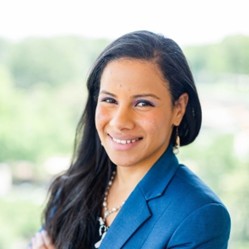
Soribel Feliz is a consultant in Responsible AI and a thought leader in the AI Ethics space. She is currently a Senior AI Policy and Governance Specialist at the Department of Homeland Security. Previously, she was a Senior AI and Tech Policy Advisor for Senator Bill Cassidy, as part of an AI Rapid Response Fellowship in Congress. Prior to that, she worked in Regulatory Compliance at Meta and Microsoft. Before joining Meta, she was part of the diplomatic service with the US Department of State, serving overseas in Bucharest, Romania, and São Paulo, Brazil, as well as in Washington, DC. She earned a Master’s degree in Public Administration and Economics from the Maxwell School at Syracuse University. Soribel is on this board in her personal capacity.

Neil is a professor of Computer Science at the University of Hull and has been recognized as a National Teaching Fellow and Principal Fellow of AdvanceHE. His research spans technology-enhanced learning, sustainable development, and formal methods in computer science. He leads the University’s Computer Science Pedagogic and Education Group and chairs both the British Computer Society’s Ethics Group and the International Federation for Information Processing Working Group 9.2 on Social Accountability and Computing. Neil has authored more than 150 publications and has contributed extensively to AdvanceHE through reports on flexible learning, assessment, and educational inclusion. His work continues to shape ethical computing and responsible digital practice nationally and internationally. In recent years he has focused on the impact of AI on education, as well as applications of AI to address some of the United Nations’ Sustainable Development Goals, including education.

Prof. Samira Hosseini holds a BSc in Applied Physics, an MSc in Polymer Chemistry, and a PhD in Biomedical Engineering. She has completed postdoctoral training at the Research Laboratory of Electronics (RLE) at the Massachusetts Institute of Technology (MIT), USA. Prof. Hosseini served as director of the Writing Lab at the Institute for the Future of Education, Tecnológico de Monterrey, where she led initiatives in educational research, faculty development, and publication strategy. She also held a research professor appointment at the School of Engineering and Sciences at Tecnológico de Monterrey. She is a visiting professor at Universidad de Huelva in Spain. She is a senior member of the Institute of Electrical and Electronics Engineers (IEEE) and a member of the IEEE Education Society. Her research team has received multiple recognitions, including the “Best Invention of the Year” award from the Convocatoria Programa Jalisciense de Fomento a la Propiedad Intelectual, granted by the government of Guadalajara, Mexico. She was also the recipient of the Hero of the Year award for her outstanding contributions to Scientific Production and Faculty Training.

Kingsley received his PhD in Software Engineering from the University of East London, UK. He is a research professor and mentor at the Institute for the Future of Education and Department of Computer Science, School of Engineering and Sciences, Tecnologico de Monterrey, Mexico. He is a senior member of the Institute of Electrical and Electronics Engineers (IEEE), a member of the Institution of Engineering and Technology UK (IET), IEEE SMCS Technical Committee (TC) on Soft Computing, and IEEE Computer Society. He has served as associate editor, book editor, guest editor, and editorial board member in reputable journals, conferences, and publishers in Computer Science and Education, such as Journal of Big Data (Springer), Computers and Electrical Engineering (Elsevier), and the International Journal of Sustainability in Higher Education (Emerald). Kingsley received the Springer Nature Editor of Distinction Award in 2025, an honor for serving as associate editor in the Journal of Big Data (Springer). His research interests include process mining and automation, learning analytics and design, data science, educational technologies, artificial intelligence, machine learning, text mining, computers and education, and educational innovation.
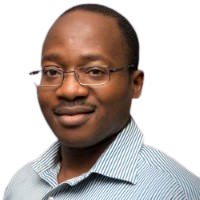
Julius T. Nganji is an adjunct faculty member in the Department of Occupational Science and Occupational Therapy at the University of Toronto’s Temerty Faculty of Medicine. He holds a PhD in Computer Science from the University of Hull, UK, where his research focused on personalizing e-learning for students with disabilities using web ontologies. His current work explores artificial intelligence in education, digital accessibility, e-learning personalization, usability, and human-computer interaction. He is an active researcher, reviewer, and guest editor across academic journals.

José Luis Martín Núñez is an associate professor at the Institute for Educational Sciences (ICE) at the Universidad Politécnica de Madrid (Spain). He earned his PhD in Information and Knowledge Engineering, with an extraordinary award, from the University of Alcalá. His dissertation received the Best Thesis Award in Technology and Education from the Official College of Telecommunications Engineers in 2017. He holds a degree in Telecommunication Engineering and an MBA from the Universidad Politécnica de Madrid. Since 2024, he has been a senior member of the IEEE and is an active member of the IEEE Education Society. His research has been published in prestigious journals such as IEEE Transactions on Education, the International Journal of Engineering Education, Heliyon, Frontiers in Education, the Journal of Universal Computer Science, as well as in the proceedings of the IEEE FIE conference. His main research interests include Educational Technology, Artificial Intelligence in Education, and STEM Teacher Training. He leads the EduCyT educational innovation group (Education in Science and Technology) and is also a member of the research group ForPROFE (Research Group for the Training of Science and Technology Teachers).
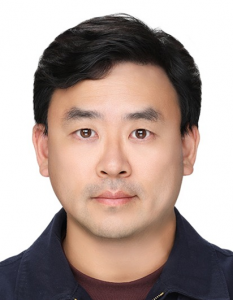
Gwanggil Jeon received his B.S., M.S., and Ph.D. (summa cum laude) degrees in Electronics and Computer Engineering from Hanyang University, Seoul, Korea, in 2003, 2005, and 2008. He subsequently held research and faculty positions at the University of Ottawa (post-doctoral fellow), Niigata University (assistant professor), and later served as a visiting scholar at ENS Paris-Saclay. He was also a prestigious visiting professor at the University of Milan (2019–2020) and a visiting professor at the Federal University of Uberlândia, Brazil (2019–2020, 2023–2024). He is currently a professor at Incheon National University. His honors include the IEEE Chester Sall Award (2007), the ETRI Journal Paper Award (2008), recognition as an ACM Distinguished Speaker (2022), and the Industry-Academic Merit Award from the Korean Ministry of SMEs and Startups (2020).

Paula Marcelo Martínez is a researcher at the University of Huelva, Spain. She holds a PhD in Education from the University of Seville, as well as a Master’s in Management, Evaluation, and Quality of Training Institutions and a Master’s in E-learning from the same university. Her research focuses on teachers’ professional development in connected environments, with a particular interest in how educators engage in informal learning, collaboration, and the creation of support networks through digital and social platforms. She teaches in the Degree Programs of Early Childhood Education, Primary Education, and Pedagogy, specializing in the area of Didactics and Educational Organization.

Dr. T. V. Gopal is currently an Adjunct Professor in Computer Science & Engineering and Artificial Intelligence at Mahindra University, Hyderabad, India. He retired as a Professor of Computer Science and Engineering from the College of Engineering, Guindy (CEG Campus), Anna University, where he also served as Director of the Centre for Applied Research in Indic Technologies (CARTI) until his retirement. His areas of expertise include Computer Science, Software Engineering, Information Architecture, Usability Engineering, and Cyber-Physical Systems, with research interests extending to Science and Spirituality. Dr. Gopal has published over 100 research papers, authored four books, and co-edited eleven conference proceedings. He is actively associated with professional bodies including CSI, ICANN, IFIP WG 9.2, IEEE, and the ACM India Council. He currently serves on the editorial boards of three national journals, two international journals, and one international journal focused on STEM education and school students.
Article processing charge (APC):
2000 USD (Excluding taxes)
Discounted APC:
$200 for all articles
submitted on or before
December 2026.
Subsequent Discounted APC:
$200 for submissions received through 31 December 2026.
Artificial Intelligence Advances in Education is a new launch journal. As a new publication, the journal is building its indexing and discoverability profile progressively. The journal is a member of Crossref, the scholarly infrastructure organisation that provides persistent identifiers and metadata services for research publications. Articles published in the journal are assigned DOIs through Crossref, making them persistently identifiable and citable and enabling their publication metadata to be registered and discoverable across scholarly systems.
While Crossref registration is not the same as inclusion in an abstracting and indexing database, the journal is pursuing inclusion in appropriate indexing and abstracting services as it establishes its publication record and meets the relevant eligibility criteria.
We will update this page as indexing applications are submitted and accepted. Authors should always refer to this page for the latest information rather than relying on third-party indexing claims.
Yes. Published articles receive a Digital Object Identifier (DOI), providing a persistent and citable link to the published article. Articles currently published in Artificial Intelligence Advances in Education display individual DOIs.
We aim to provide authors with a timely, rigorous and supportive peer-review experience. The time required will vary depending on the complexity of the manuscript, the availability of appropriate reviewers and whether revisions are required.
We strive to provide a high-quality author experience while maintaining the standards and integrity of peer review. For this reason, we do not guarantee a fixed review period. Finding the right reviewers and allowing sufficient time for thoughtful, constructive assessment is more important than meeting an artificial deadline.
Authors will be kept informed of significant developments in the review process, particularly where circumstances arise that are likely to result in a substantial delay.
We are committed to keeping manuscripts moving through the editorial process efficiently and to communicating clearly with authors throughout.
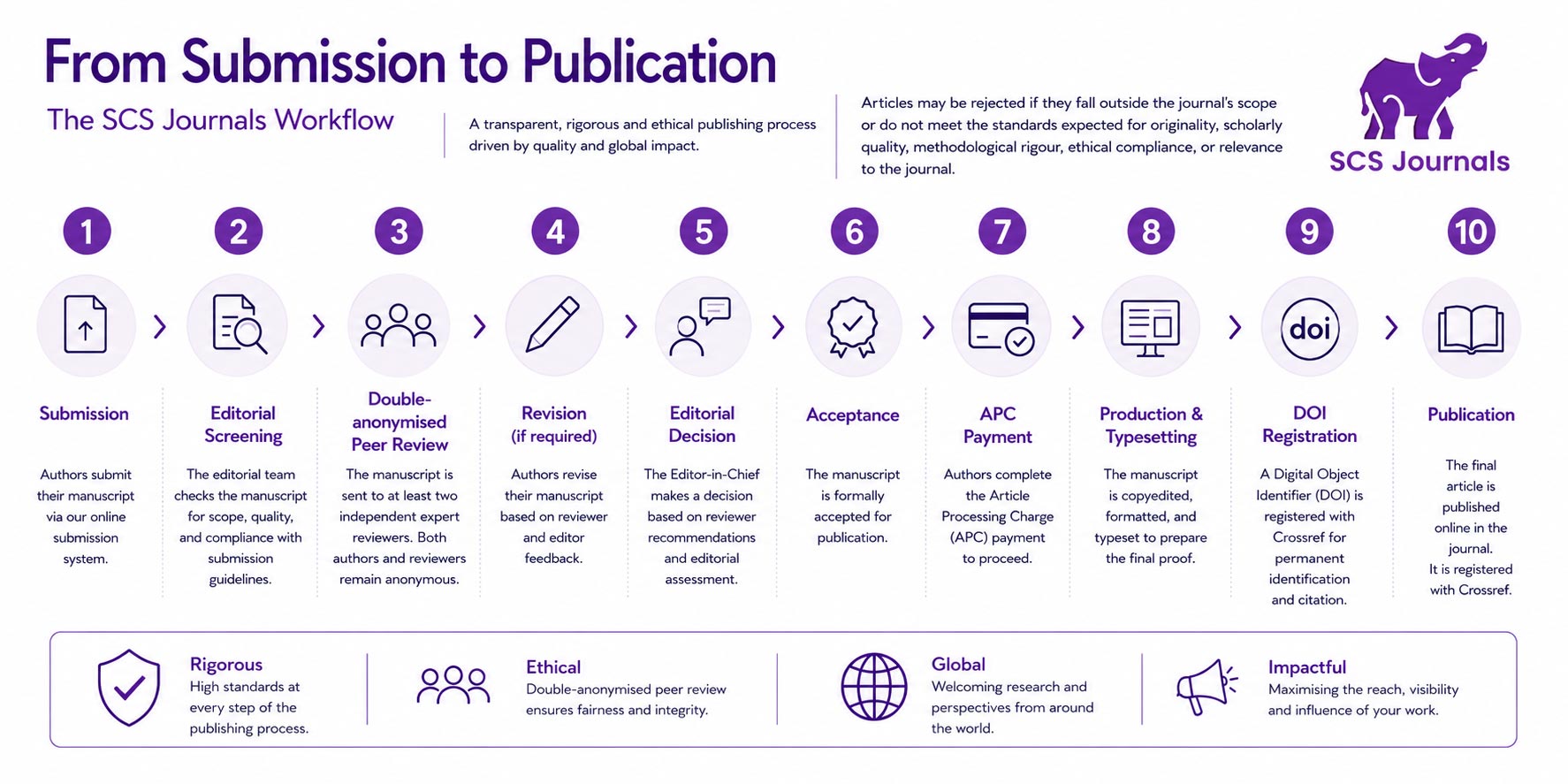
SCS Journals uses a double-anonymised peer-review process. This means that, wherever possible, the identities of both the authors and reviewers are kept confidential during the peer-review process.
When you submit a manuscript, you should therefore ensure that the version intended for peer review does not contain information that directly identifies you or your institution. This includes author names, affiliations, acknowledgements, funding information or other identifying details where these could compromise anonymity.
The editorial team will manage the submission and peer-review process so that reviewers do not normally see the authors' identities, and authors do not normally see the identities of the reviewers.
Double-anonymised peer review is designed to support a fair and objective assessment of research by reducing the potential influence of factors such as an author's identity, institutional affiliation, seniority or reputation.
Reviewers are asked to evaluate the manuscript on the basis of its quality, originality, methodological rigour, significance and relevance to the journal, rather than the identity or status of the authors.
Before submitting your manuscript for review, remove identifying information from the main manuscript wherever reasonably possible.
This may include:
If you need to refer to your own previous research, do so in a way that does not unnecessarily reveal your identity. You should not remove relevant citations simply to achieve anonymity.
Authors should also ensure that supplementary files intended for reviewers are anonymised where appropriate.
The editorial team has access to the identities of authors and reviewers so that the submission can be managed appropriately. These identities are not routinely disclosed to each other during the peer-review process.
Double anonymisation cannot guarantee complete anonymity. In specialist research areas, reviewers may sometimes be able to infer an author's identity from the subject matter, methodology, datasets, previous publications or other contextual information.
The purpose of the process is therefore to reduce potential bias, rather than to promise absolute anonymity.
Researchers with relevant subject expertise who wish to contribute to the peer-review process are encouraged to contact the journal via the Reviewer Registration Form.
Prospective reviewers may be asked to provide information regarding their areas of expertise, institutional affiliation, publication record and reviewing experience. Reviewer appointments are made at the discretion of the editorial team based on the journal's needs and the applicant's expertise.
The journal values constructive, timely and ethical peer review as an important contribution to the scholarly community.
Authors retain copyright in their work.
Upon acceptance for publication, authors grant the journal the rights necessary to publish, distribute and preserve the article. Published articles are made available under the licence specified by the journal and displayed on the article itself.
Authors should ensure that they have obtained any necessary permissions for third-party material included in their manuscript.
Articles published by SCS Journals are open access and are published under the Creative Commons Attribution Non Commercial No Derivatives 4.0 International licence (CC BY-NC-ND 4.0), unless otherwise stated on the individual article.
This licence allows readers to share, copy and redistribute the published article in any medium or format for non-commercial purposes, provided that appropriate credit is given to the original author(s) and source, a link to the licence is provided, and any changes are clearly indicated.
The licence does not permit commercial reuse or the creation or distribution of adaptations or derivatives of the published work without additional permission.
Authors retain copyright in their work, subject to the publication rights granted to SCS Journals.
Material belonging to third parties, such as images, figures or other content reproduced under separate permission, may not be covered by the article's Creative Commons licence. Readers should always check the individual article and its accompanying credit lines before reusing third-party material.
Your submission goes through an initial editorial assessment to determine whether it is suitable for the journal and meets the basic submission requirements. We aim to do this in under 14 days.
Manuscripts that are suitable for further consideration are then sent for peer review. Depending on the reviewers' recommendations and the editor's assessment, authors may be asked to revise their manuscript before a final editorial decision is made.
Once a manuscript is accepted, it proceeds through the production and publication process before being made available online.
Accepted manuscripts will be invoiced for payment. Articles are not published without payment.
Authors should prepare their manuscript according to the journal's current Author Guidelines and select the appropriate article type when submitting.
Manuscripts should be clearly structured, written in appropriate academic English, and include all information required for the relevant article type. Authors should also ensure that references, figures, tables and supplementary materials are presented in accordance with the journal's requirements.
Manuscripts that do not meet the journal's basic submission requirements may be returned to authors before entering peer review.
Artificial Intelligence Advances in Education welcomes a broad range of scholarly contributions, including Original Research, Review Articles, Systematic Reviews, Methods and Protocols, Troubleshooting articles, Short Format/Single Results, Data Reports, Perspective/Opinion articles and Conceptual Analyses.
The journal particularly welcomes interdisciplinary research with clear relevance to education, learning, teaching, policy or institutional practice.
Yes. Artificial Intelligence Advances in Education is an open access journal. Published articles are freely available to readers online. Open access means that readers can access published research without a subscription or paywall.
Yes. The standard APC is currently $2,000 USD, excluding applicable taxes.
A discounted APC of $200 is available for articles submitted on or before 31 December 2026, subject to the journal's current terms.
Payment is only required if your manuscript is accepted for publication.
Payment of the APC is only required if your manuscript is accepted for publication. Authors will receive an invoice following acceptance. No APC is charged for manuscripts that are rejected, withdrawn before acceptance, or declined during peer review.
Yes. We actively encourage the publication of negative and null findings.
Our Dual Publication Scheme allows authors to submit companion articles where appropriate: one article may present successful experimental results, while a second documents negative or null findings. Both articles undergo peer review and, when accepted and published, receive their own DOI and are fully citable.
Yes. The journal's Dual Publication Scheme is designed to encourage authors to communicate the complete research story, including findings that do not support the original hypothesis.
Authors should clearly identify the relationship between companion manuscripts and ensure that each article makes a distinct scholarly contribution. Both manuscripts are subject to peer review.
Authors may use artificial intelligence tools to assist with aspects of manuscript preparation, provided that the use of AI does not replace the authors' responsibility for the content, accuracy, originality or integrity of the work. However, AI tools cannot be listed as an author. Authorship requires accountability for the research and the published work, which can only be accepted by human authors.
The journal recognises that authors may use AI-assisted tools for language editing and polishing, particularly where English is an additional language. Reasonable use of AI to improve grammar, spelling, clarity, readability or expression does not in itself prevent submission.
Authors remain fully responsible for the final manuscript and should carefully review and verify any AI-assisted changes. AI tools should not be used for literature reviews and references, to generate or alter research findings, misrepresent sources, or otherwise compromise the integrity of the research.
Where AI has been used substantially in the research process or to generate content, analysis, images, data or other material, authors should disclose its use in accordance with the journal's current AI and research-integrity policies.
We take research integrity seriously. Authors are responsible for the originality, accuracy and integrity of their work. Concerns including plagiarism, fabrication, falsification, authorship or other forms of research misconduct may be investigated in accordance with the journal's policies and recognised publication ethics principles, such as COPE.
Suspected misconduct should be reported to the Editor-in-Chief and industry-standard, such COPE guidance for misconduct and retractions, will be followed.
If a manuscript is rejected, the editorial decision will normally be based on factors such as suitability for the journal based on its aims and scopes, scholarly quality, methodological rigour, originality and the reviewers' or editor's assessment.
A rejection does not necessarily mean that the research is without merit. Where there is feedback, authors should carefully consider the editorial and reviewer feedback and may wish to revise and submit the work to another appropriate journal.
No. Manuscripts submitted to the journal must be original and must not be under consideration by another journal at the same time.
By submitting, authors confirm that the work has not previously been published and is not simultaneously under consideration elsewhere.
The journal is committed to maintaining the integrity of the scholarly record. Where significant errors, concerns regarding research integrity, or other issues are identified, the journal may publish corrections, expressions of concern, retractions or other notices as appropriate. Editorial actions are undertaken in accordance with the journal's policies and recognised publication ethics guidance. Any corrections or notices will be linked to the original article to ensure transparency for readers.
If an error is identified after publication, authors should contact the editorial office as soon as possible. The editorial team will assess the nature and significance of the issue and determine the appropriate course of action. This may include the publication of a correction, expression of concern, retraction, or other editorial notice where appropriate.
The journal is committed to maintaining the accuracy and integrity of the scholarly record.
Articles published in Artificial Intelligence Advances in Education are open access and freely available online. You can browse the current issue, search published articles and access available article formats directly through the journal website.
Each published article has its own citation information and DOI. The article page provides the information required to cite the article, including the authors, publication year, article title, journal, volume and issue, page information where applicable, and DOI.
Where available, citation formats can also be generated directly from the article page.
A DOI, or Digital Object Identifier, is a persistent identifier assigned to a scholarly publication. Unlike a conventional web address, a DOI is designed to remain a stable way of identifying and linking to a published research article, even if the article's web location changes.
Yes. Articles published under the journal's open access licence can be accessed and shared in accordance with the terms of the applicable Creative Commons licence. Readers should check the licence displayed on the individual article before reusing, adapting or commercially exploiting published content.
Articles published by SCS Journals are open access and are published under the Creative Commons Attribution Non Commercial No Derivatives 4.0 International licence (CC BY-NC-ND 4.0), unless otherwise stated on the individual article.
This licence allows readers to share, copy and redistribute the published article in any medium or format for non-commercial purposes, provided that appropriate credit is given to the original author(s) and source, a link to the licence is provided, and any changes are clearly indicated.
The licence does not permit commercial reuse or the creation or distribution of adaptations or derivatives of the published work without additional permission.
Authors retain copyright in their work, subject to the publication rights granted to SCS Journals.
Material belonging to third parties, such as images, figures or other content reproduced under separate permission, may not be covered by the article's Creative Commons licence. Readers should always check the individual article and its accompanying credit lines before reusing third-party material.
Reuse is subject to the Creative Commons licence attached to the article and any specific third-party copyright restrictions.
Readers should check the licence and the credit information associated with the material before reproducing or adapting figures, tables, images or other content.
If you identify a potential error in a published article, please contact the journal editorial office with the article title, DOI and details of the issue you have identified.
The editorial team will assess the concern and determine whether a correction or other editorial action is required.
You can use the journal's search functionality to find articles by keyword, author or topic.
The journal covers a broad range of subjects at the intersection of artificial intelligence and education, including AI applications in higher education, pedagogy, assessment, policy, ethics, research and scholarly communication, and interdisciplinary and global perspectives.
Check the journal website regularly for newly published articles and issues. We also take the opportunity to publish social media stories about new articles on LinkedIn so do follow our SCS Journals company and journal homepage. We also undertake email marketing activities.
As the journal develops, SCS Journals will also provide additional ways for readers and researchers to discover new publications and research developments.